If you live in the UAE, you already know the feeling — you step out of an ice-cold, air-conditioned mall or office into 42°C heat, and by the evening your skin feels tight, flaky, and dull no matter how much water you drink. Regular lotions soak in for twenty minutes and disappear, leaving you reaching for the bottle again by lunchtime.
That’s not your skin failing you. It’s a hydration mismatch. Lightweight lotions are mostly water — great for a quick refresh, useless against the double stress of desert air and constant AC exposure. What UAE skin actually needs is a body butter: a thick, oil-and-butter-based moisturizer that seals hydration in rather than sitting on top of it.
In this guide, you’ll learn exactly why body butter works better than lotion for dry skin, which ingredients actually matter, the most common mistakes people make when applying it, and a simple routine you can start tonight.
Why Regular Lotion Isn’t Enough for UAE Skin
Most drugstore lotions are formulated for temperate climates — cool air, moderate humidity, occasional dryness. The UAE is the opposite environment almost year-round:
- Extreme heat outdoors pulls moisture from the skin through increased sweating and evaporation
- Constant air conditioning indoors (homes, cars, offices, malls) strips ambient humidity to near-desert levels
- Hard or desalinated tap water can leave a residue that disrupts the skin barrier over time
- Frequent showering in hot weather removes natural oils faster than in cooler climates
The result is what dermal experts call “trans-epidermal water loss” — water escaping through the skin faster than it can be replaced. Thin, water-based lotions simply don’t have the oil content needed to slow that process down.
What Causes Dry, Flaky Skin (Beyond the Weather)
Before assuming it’s just the climate, it helps to rule out the everyday habits that quietly worsen dryness:
- Hot showers — comfortable in the moment, but hot water strips the skin’s natural oil barrier
- Harsh, sulfate-heavy soaps — foaming soap bars and body washes often contain detergents that over-clean the skin
- Skipping moisturizer after showering — the best absorption window is within 3 minutes of towel-drying, and most people miss it
- Over-exfoliating — scrubbing too often without following up with a rich moisturizer damages the skin barrier further
- Diet and hydration — low water intake and high caffeine/salt intake can show up on the skin first
Common Mistakes People Make With Body Moisturizers
- Using lotion in winter and expecting summer-level hydration — thicker climates and thicker skin needs deserve thicker products
- Applying to dry skin — moisturizer works best sealing in water that’s already on the skin, so apply damp, not bone-dry
- Choosing fragrance-heavy synthetic creams — many contain mineral oil and silicones that sit on the surface without nourishing
- Ignoring elbows, knees, and heels — these areas have fewer oil glands and dry out fastest, yet get the least attention
- Buying based on packaging, not ingredients — a beautiful jar means nothing if the formula is 80% water
Best Practices for Treating Dry Skin
- Moisturize immediately after showering, while skin is still slightly damp
- Choose a butter-based formula (shea, kokum, mango) over a purely water-based lotion for anything drier than “normal” skin
- Layer — a lightweight lotion in the morning under clothes, a rich body butter at night when skin can fully absorb it
- Exfoliate 2–3 times per week with a gentle sugar scrub before applying body butter, so the moisturizer penetrates rather than sitting on dead skin
- Focus on ingredient quality — look for shea butter, kokum butter, coconut oil, and vitamin E rather than long chemical ingredient lists
Why Choose Natural Handmade Skincare?
Mass-produced body creams are built for shelf life and cost efficiency — which usually means mineral oil, synthetic thickeners, and parabens doing the heavy lifting instead of real butters and oils. Handmade, small-batch body butter is formulated differently:
- Real butters, not diluted derivatives — shea and kokum butter are used at concentrations that actually moisturize, not just appear on the ingredient label
- No harsh preservative loads — small-batch production means fresher stock and simpler formulas
- Skin-recognizable ingredients — your skin absorbs plant-based fats more efficiently than synthetic emollients
- Cruelty-free and paraben-free by default — most artisan skincare brands build around these standards rather than treating them as a premium add-on
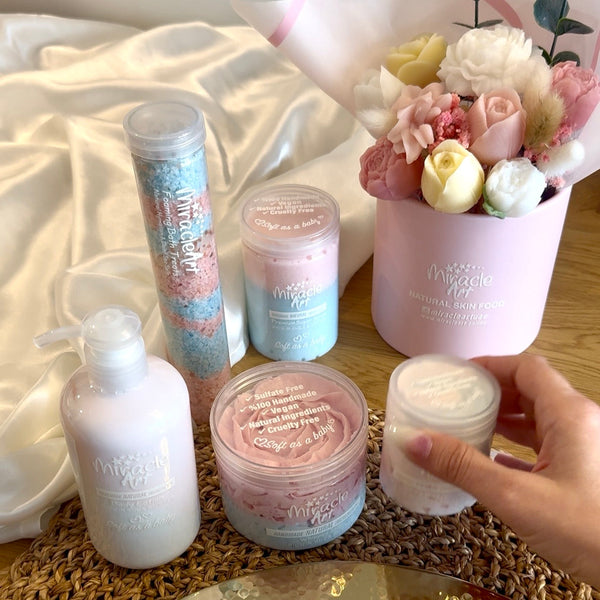
Miracle Art body butter is handcrafted in the UAE and certified by the UAE Ministry of Industry and Advanced Technology, made with shea butter, kokum butter, and vitamin E — no harsh chemicals, no parabens.
Miracle Art Recommendation
For genuinely dry skin, these body butters are formulated around deep-hydration butters rather than light, water-based fillers:
- Lavender Lush Body Butter — a calming, relaxing scent ideal for a nightly routine, made with shea and kokum butter
- Baby Powder Body Butter — Miracle Art’s best-seller, soft and clean-scented, great for everyday use
- Rose Musk Body Butter — deep moisturizer with added vitamin E, a good pick for very dry or sun-exposed skin
- Vanilla Dream Body Butter — shea, kokum, and mango butter blend, gentle enough for sensitive skin
Browse the full range in the Body Butter collection.
If you also want a lighter daytime option, pair your body butter with the Body Lotion range for morning use.
How To Use Body Butter (Step-by-Step)
- Shower or bathe using a gentle, non-stripping cleanser
- Pat skin damp, not fully dry — leave a small amount of moisture on the surface
- Scoop a small amount of body butter and warm it between your palms until it softens
- Massage in circular motions, starting from ankles and wrists moving upward toward the heart — this also supports circulation
- Focus extra product on rough areas: elbows, knees, heels, shins
- Allow 2–3 minutes for full absorption before dressing
- Repeat nightly, and add a light lotion layer in the morning if needed
Final Thoughts
Dry, flaky skin in the UAE isn’t something you have to accept as “just the weather.” The right moisturizer — thick enough to seal in hydration, made from real butters your skin can actually use — makes a visible difference within days, not weeks. If your current lotion disappears by lunchtime, it’s a sign your skin needs something richer.
Explore Miracle Art’s handmade body butter collection and give your skin the deep hydration it’s been missing — shop the Body Butter range now.
FAQ
Q: What is the best body butter for very dry skin? A: Look for body butter formulated with shea butter, kokum butter, and vitamin E, which combine deep moisturizing fats with barrier-repair properties. Avoid products where water is the first ingredient.
Q: Is body butter better than lotion for dry skin? A: Yes, for genuinely dry skin. Body butter has a much higher oil-to-water ratio than lotion, which means it seals in moisture rather than evaporating quickly — especially important in hot, air-conditioned climates like the UAE.
Q: How often should I apply body butter? A: Once daily is enough for most people, ideally right after showering. Very dry skin can benefit from twice-daily application — morning and night.
Q: Can body butter be used on the face? A: Body butter is formulated for thicker body skin and can feel heavy on the face, especially for oily or acne-prone skin types. It’s best kept to the body — elbows, knees, hands, and heels.
Q: Does body butter clog pores? A: Ingredients like kokum butter are non-comedogenic, meaning they’re less likely to clog pores than heavier mineral-oil-based creams. Shea butter is generally safe for body use but should be patch-tested if you have very reactive skin.
Q: Why does my skin still feel dry in the UAE even after moisturizing? A: This is usually caused by applying a water-based lotion instead of an oil-rich body butter, or by moisturizing on completely dry skin instead of slightly damp skin, which reduces how much moisture actually gets locked in.
Q: How long does a jar of body butter last? A: With daily full-body use, a standard jar typically lasts 4–6 weeks, depending on how much surface area you’re covering.
Q: Is handmade body butter better than store-bought brands? A: Handmade, small-batch body butter typically uses higher concentrations of real butters and fewer synthetic fillers than mass-market brands, which often prioritize shelf life and cost over ingredient quality.