Quick Answer: Body butter and body lotion both moisturize, but they work differently. Body lotion is mostly water, absorbs quickly, and offers light, short-term hydration — best for normal skin or daytime use. Body butter is mostly natural butter (like shea or kokum), absorbs slower, and seals in moisture for hours — better for dry, flaky, or climate-stressed skin. Many people benefit from using both: lotion by day, body butter at night.
Standing in front of a shelf (or a product page) trying to choose between body lotion and body butter is one of the most common skincare decisions people get wrong — not because either product is bad, but because most people use the wrong one for their actual skin needs. Choosing based on price or scent alone, instead of formulation, is why so many people still complain of dry skin despite moisturizing daily.
This guide compares body butter and body lotion side by side — texture, hydration power, ingredients, and best use cases — so you can build a routine that actually works instead of guessing.
What Is Body Lotion?
Body lotion is a lightweight, water-based moisturizer. Water is typically the first ingredient, with oils and emollients emulsified in at a much lower concentration than body butter. This is what gives lotion its thin, pourable texture and fast absorption.
What Is Body Butter?
Body butter is the opposite formulation — mostly natural butter and oil, with little to no water. This is what gives it a thick, spreadable texture and a much slower, deeper absorption compared to lotion.
Body Butter vs Body Lotion: Key Differences
| Factor | Body Lotion | Body Butter |
|---|---|---|
| Base composition | Mostly water | Mostly butter/oil, little to no water |
| Texture | Thin, pourable | Thick, whipped, spreadable |
| Absorption speed | Fast (seconds to minutes) | Slower (a few minutes) |
| Hydration depth | Light, surface-level | Deep, seals in moisture for hours |
| Best for | Normal skin, daytime use, quick application | Dry, flaky, or climate-stressed skin, nighttime use |
| Reapplication needed | Frequent (multiple times a day) | Infrequent (often once daily is enough) |
| Feel after application | Light, no residue | Rich, slightly heavier until fully absorbed |
| Climate suitability | Humid or mild climates | Hot, dry, or heavily air-conditioned climates |
Why Lotion Alone Often Isn’t Enough
In hot, air-conditioned environments — like most of the UAE for much of the year — lotion’s water content evaporates quickly, taking much of its hydrating benefit with it. That’s why lotion can feel refreshing in the moment but leave skin dry again within an hour or two. It’s not a flaw in the product; it’s simply a different job than body butter is built to do.
Why Body Butter Alone Isn’t Always the Right Choice Either
Body butter’s richness is a strength for dry skin, but it can feel too heavy for oily or acne-prone skin, or for anyone who needs to apply moisturizer quickly before getting dressed for the day. Its slower absorption also makes it a better fit for a nighttime routine than a rushed morning one.
Common Mistakes When Choosing Between Them
- Assuming “thicker is always better.” For oily or combination skin, a heavy body butter can feel greasy and unnecessary — lotion may be the better daily fit.
- Using lotion for genuinely dry or flaky skin and expecting body-butter-level results. Lotion’s water-heavy formulation simply can’t match body butter’s sealing power.
- Applying either product to completely dry skin. Both work better when applied to slightly damp skin, right after showering, when there’s already moisture on the surface to lock in.
- Never using them together. Layering — lotion for quick daytime hydration, body butter for deep overnight repair — often works better than picking just one.
How to Decide Which One You Need
- Choose body lotion if: your skin feels normal to mildly dry, you need fast absorption before getting dressed, or you’re moisturizing multiple times a day
- Choose body butter if: your skin feels tight, flaky, or rough regardless of how often you moisturize, you live in a hot or heavily air-conditioned climate, or you’re building a nighttime self-care routine
- Use both if: you want light hydration by day and deeper repair overnight — this is the routine most dermal experts recommend for genuinely dry skin types
Why Choose Natural, Handmade Formulas — Lotion or Butter?
Whichever texture fits your skin, the ingredient quality matters just as much as the format:
- Real butters and oils, not diluted derivatives used mainly for label appeal
- No mineral oil or heavy synthetic fillers
- Small-batch freshness, with less time in storage before reaching your skin
- Simpler formulas, reducing the risk of irritation from unnecessary additives
Miracle Art Recommendation
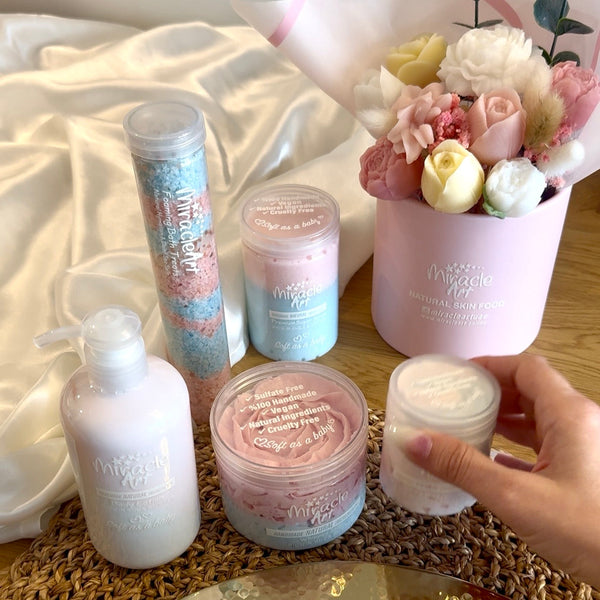
Build a layered routine using Miracle Art’s range:
- Daytime hydration: Baby Powder Body Lotion or Lavender Lush Body Lotion — light, fast-absorbing, ideal under clothing
- Nighttime deep repair: Rose Musk Body Butter or Lavender Lush Body Butter — rich, shea and kokum butter base for overnight barrier repair
Explore both ranges: Body Lotion collection and Body Butter collection.
How to Layer Both in One Routine
- Morning: Shower, pat skin damp, apply body lotion for light, fast-absorbing hydration under clothes
- Evening: Shower or bathe, pat skin damp, apply body butter generously to seal in moisture overnight
- Extra-dry zones: Use body butter on elbows, knees, and heels even during the day if lotion alone isn’t keeping them comfortable
Final Thoughts
Body butter and body lotion aren’t competing products — they’re built for different jobs. Lotion handles light, fast, daytime hydration; body butter handles deep, lasting repair. The skin complaints most people have (“I moisturize every day and I’m still dry”) usually trace back to using only one, when their skin actually needs both.
Shop Body Butter and Body Lotion and build the routine your skin actually needs.
FAQ
Q: Is body butter better than lotion? A: Neither is universally “better” — body butter is more effective for deep hydration and dry skin, while lotion is better for fast, light hydration and daytime use. Many people benefit from using both.
Q: Can I use body butter and lotion together? A: Yes. A common and effective routine is lotion in the morning for quick, light hydration, and body butter at night for deeper, longer-lasting repair.
Q: Which is better for very dry skin, body butter or lotion? A: Body butter. Its higher concentration of natural butters and oils seals in moisture far more effectively than lotion’s water-based formula.
Q: Does body butter absorb slower than lotion? A: Yes. Because body butter has little to no water, it takes a few minutes longer to fully absorb compared to lotion, which is designed for fast absorption.
Q: Is body lotion enough for hot, dry climates like the UAE? A: For many people, no — lotion’s water content evaporates quickly in hot, air-conditioned environments, which is why body butter is often recommended as a nightly addition.
Q: Can oily skin use body butter? A: Oily or acne-prone skin can usually tolerate body lotion better on a daily basis, though a small amount of body butter on very dry patches (elbows, knees) is generally fine.
Q: What’s the difference between body yogurt and body lotion? A: Body yogurt typically sits between lotion and body butter in richness — lighter than body butter but more hydrating than a standard lotion, often with a whipped, airy texture.
Q: How do I stop my skin feeling dry even after moisturizing daily? A: This is often a sign that a water-based lotion alone isn’t enough — adding a butter-based moisturizer at night, applied to slightly damp skin, usually resolves it within days.