Smooth, even-toned skin doesn’t happen by accident — and it rarely comes from moisturizer alone. If your legs, arms, or back feel rough no matter how much lotion you apply, the missing step is almost always exfoliation. Dead skin cells build up on the surface faster than most people realize, and no cream, however expensive, can absorb properly through that barrier.
This guide breaks down exactly what a body scrub does, why it matters more than people assume, the mistakes that cancel out its benefits, and how to build exfoliation into a routine that actually delivers visibly smoother skin.
What a Body Scrub Actually Does
A body scrub works through mechanical exfoliation — physically lifting away the outer layer of dead skin cells using a textured base, usually sugar or salt, suspended in an oil or butter carrier. This does three things at once:
- Removes the buildup that makes skin look dull, rough, or flaky
- Unclogs pores and hair follicles, which reduces ingrown hairs and razor bumps
- Opens the surface so moisturizers applied afterward absorb far more effectively
Without this step, even the richest body butter is working against a layer of dead cells it can’t penetrate.
The Real Causes of Rough, Bumpy Skin
- Natural skin cell turnover slowing with age — dead cells shed less efficiently over time, leading to buildup
- Shaving without exfoliating first — leads to the rough, bumpy texture often called “strawberry legs”
- Dry climate and AC exposure — speeds up surface dryness, making dead skin cling longer
- Tight clothing and friction — areas like thighs and underarms often develop rougher texture from constant rubbing
- Skipping body care entirely — most people exfoliate their face but never think to do the same for the body
Common Exfoliation Mistakes
- Scrubbing too hard — exfoliation should never hurt; aggressive scrubbing can cause micro-tears and irritation
- Exfoliating every day — this strips the skin barrier faster than it can repair, leading to sensitivity and redness
- Using a scrub on broken or irritated skin — always wait until skin has healed from razor burn, sunburn, or breakouts
- Skipping moisturizer afterward — exfoliation removes dead skin but doesn’t add hydration; the two steps work together, not separately
- Using scrubs with sharp, uneven particles — some cheaper products use walnut shell or ground plastic microbeads, which can micro-tear skin; sugar-based scrubs are gentler and dissolve as you use them
Best Practices for Exfoliating Safely
- Exfoliate 2–3 times per week — enough to prevent buildup without over-stripping the barrier
- Use gentle, circular motions, letting the product do the work rather than pressing hard
- Focus on rough zones: elbows, knees, shins, heels, upper arms
- Always follow immediately with a moisturizer while skin is still slightly damp
- Choose a scrub with a moisturizing base (shea or mango butter) so you’re nourishing skin even while exfoliating
Why Choose Natural Handmade Skincare?
Many commercial scrubs use harsh synthetic beads or excessive fragrance that can irritate freshly exfoliated skin. A natural, handmade sugar scrub takes a gentler approach:
- Sugar granules dissolve as you massage, reducing the risk of micro-tears compared to harder exfoliating particles
- Butter-based carriers (shea, mango) mean you’re moisturizing at the same time you’re exfoliating, not stripping skin dry
- No synthetic microbeads — better for your skin and more environmentally responsible
- Small-batch formulation keeps ingredient concentrations high and consistent
Miracle Art Recommendation
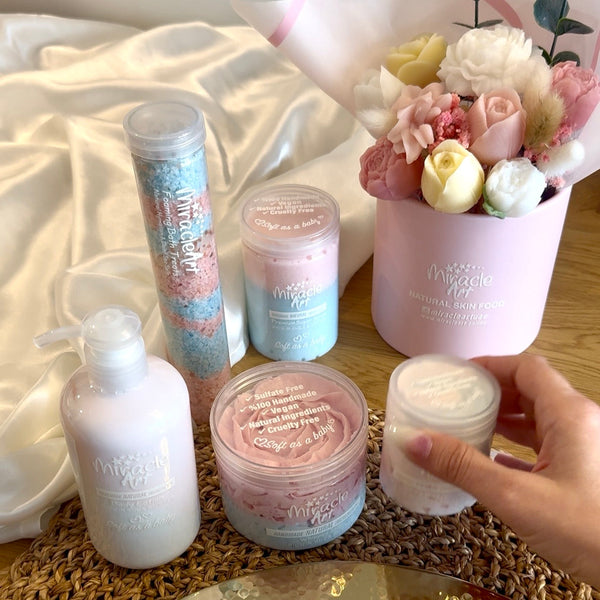
Miracle Art’s sugar scrubs are formulated with shea and mango butter, so exfoliation and hydration happen in the same step:
- Baby Powder Sugar Scrub — the brand’s best-selling scrub, great for all-over weekly use
- Lavender Lush Sugar Scrub — calming scent, ideal for an evening routine
- Vanilla Dream Sugar Scrub — positioned for “skin repair,” a good choice for rougher, drier areas
- Rose Musk Sugar Scrub — a fresh option for regular rotation
Prefer variety? The 2-piece Sugar Scrub sets let you rotate scents without committing to a single jar. Browse the complete range in the Body Scrub collection.
Pair your scrub with a Body Butter immediately afterward to lock in the smoothing effect.
How To Use a Body Scrub (Step-by-Step)
- Wet skin thoroughly in a warm (not hot) shower
- Scoop a small amount of scrub and apply to damp skin
- Massage gently in circular motions, focusing on rough areas like elbows, knees, and shins
- Rinse thoroughly with warm water — the sugar will dissolve, leaving a light layer of butter behind
- Pat dry gently — don’t rub, which can undo the smoothing effect
- Apply body butter immediately while skin is still slightly damp to seal in the results
Final Thoughts
Rough or dull-looking skin usually isn’t a moisturizer problem — it’s an exfoliation problem. Adding a body scrub two to three times a week clears the path for every other product in your routine to actually work. The visible difference — smoother texture, less buildup, better product absorption — is often noticeable within a single use.
Ready to feel the difference? Shop Miracle Art Sugar Scrubs and pair with a body butter for the full effect.
FAQ
Q: What are the benefits of using a body scrub? A: Body scrubs remove dead skin cell buildup, unclog pores, reduce ingrown hairs, and allow moisturizers to absorb far more effectively afterward.
Q: How often should I use a body scrub? A: 2–3 times per week is ideal. Daily exfoliation can strip the skin barrier and cause irritation.
Q: Can body scrubs help with strawberry legs? A: Yes — regular exfoliation before shaving helps prevent the buildup of dead skin and ingrown hairs that cause the “strawberry legs” appearance.
Q: Should I moisturize after using a body scrub? A: Always. Exfoliation removes dead skin but doesn’t add hydration, so applying a body butter or lotion immediately afterward is essential to lock in smoothness.
Q: Are sugar scrubs better than salt scrubs? A: Sugar scrubs are generally gentler, as the granules dissolve more easily and are less likely to cause micro-tears compared to coarser salt scrubs, making sugar a safer choice for sensitive skin.
Q: Can I use a body scrub on sunburned or irritated skin? A: No — exfoliation should be avoided on broken, sunburned, or freshly shaved irritated skin until it has fully healed.
Q: Do body scrubs help with dry skin? A: Yes, especially scrubs formulated with a moisturizing butter base, since they remove the dead skin blocking hydration while nourishing the surface at the same time.
Q: What’s the difference between a sugar scrub and an exfoliating brush? A: A sugar scrub combines mechanical exfoliation with moisturizing oils and butters in one step, while a dry brush only exfoliates without adding any hydration — meaning a moisturizer step is still required afterward either way.